What changed for business phone systems in 2026?
In 2026, the business phone system is no longer just a place to answer calls. For small teams, it has become the front door for sales, support, hiring, local presence, customer follow-up, and internal accountability. The best systems now combine phone numbers, SMS, voicemail, shared contacts, working hours, analytics, and lightweight automation in one place.
That shift matters because customers still want fast human help, but teams are more distributed than ever. A phone setup that worked when everyone sat in one office can quickly become messy when employees use personal phones, shared inboxes, and disconnected apps to handle customer conversations.
This guide breaks down the most important business phone system trends for 2026 and, more importantly, what small teams should upgrade first.
1. AI is useful, but only when the phone system has clean basics
AI is everywhere in business communication now, but the practical value comes from simple workflows: call summaries, voicemail transcription, suggested replies, routing context, and follow-up reminders. These tools are strongest when the underlying phone system already knows who called, which number they called, who owns the customer, and what happened last.
For a small team, the first AI-ready upgrade is not a complex contact center. It is cleaner call ownership. Use shared business numbers, assign teammates, keep customer contacts in one place, and make sure missed calls and voicemails do not disappear on one employee's personal device.
Upgrade first: centralize calls, SMS, voicemail, and contacts before buying advanced AI add-ons.
2. Teams expect work phone numbers without extra phones
The old answer to work-life separation was a second device or a second SIM. In 2026, that feels heavy for many teams. Employees want a dedicated work number they can use from the device they already carry, while businesses want the number to stay with the company if a role changes.
A modern work phone solves this by giving each teammate a business number, shared calling tools, voicemail, and working hours without forcing the company to buy and manage extra hardware.
Upgrade first: move work calls and texts away from personal numbers, especially for sales, support, operations, and customer-facing managers.
3. Business SMS is now part of the phone system
Customers often reply faster to text than email, especially for appointments, reminders, quotes, delivery updates, and quick follow-ups. But business SMS is no longer something teams should run casually from personal phones. Sender registration, consent, opt-out handling, and message quality all affect deliverability and risk.
In 2026, the stronger setup is to manage SMS alongside the business phone number. That keeps customer history in one place and makes it easier to see who replied, who needs a follow-up, and which conversations are still open.
Upgrade first: use business numbers for customer texting and create a clear policy for consent, opt-outs, and response ownership.
4. Local presence still matters
Even as companies sell globally, local numbers continue to build trust. A customer in the United States, United Kingdom, Canada, Australia, or Europe is more likely to recognize and answer a number that feels relevant to them. Local numbers also help teams separate markets, campaigns, locations, and departments.
If your team is expanding, look at virtual phone numbers before opening a local office or buying country-specific hardware. A virtual number can help sales and support teams create local presence while still managing conversations from one account.
Upgrade first: add local or regional numbers for your most important markets, then route them to the right teammate or team.
5. Privacy is now a retention feature
Employees do not want customer calls on their personal number forever. Managers do not want customer relationships trapped on personal devices. Customers do not want to be passed around because the company cannot see the call history.
A dedicated business phone setup protects everyone. Employees keep personal numbers private. The company keeps ownership of important numbers and contacts. Customers get a more consistent experience.
Upgrade first: document which conversations belong in the business phone system and stop using personal numbers for customer-facing workflows.
6. Shared visibility beats scattered communication
Small teams often lose deals and support requests in the gaps between calls, texts, WhatsApp messages, inboxes, spreadsheets, and personal phones. A better phone system reduces those gaps by showing missed calls, voicemail, SMS, assigned owners, and contact details in one place.
This does not mean every teammate needs access to every conversation. It means managers should be able to design visibility intentionally: shared numbers for teams, private numbers for individuals, and clear ownership for follow-up.
Upgrade first: create shared numbers for sales and support so more than one person can respond when needed.
7. Security and continuity are board-level concerns, even for small teams
When a phone number is tied to a personal device, the business takes on unnecessary risk. What happens if an employee leaves, loses a phone, changes SIM cards, or forgets to forward a number? What happens when a customer calls during vacation or after hours?
In 2026, phone continuity is part of operational resilience. Numbers, voicemail, contacts, and customer history should belong to the business account, not one personal device.
Upgrade first: make sure key customer numbers can be reassigned, shared, or recovered without disrupting service.
How to prioritize your 2026 phone system upgrade
If you are not sure where to begin, use this order:
- Separate work and personal communication. Give customer-facing teammates dedicated work numbers.
- Centralize history. Keep calls, SMS, voicemail, and contacts in one system.
- Add shared numbers. Use shared access for sales, support, and operations.
- Improve response speed. Use missed-call texts, voicemail, notifications, and assignments.
- Add local numbers. Build trust in your highest-value markets.
- Layer in automation. Add AI summaries, templates, and routing only after the basics are clean.
What to look for in a 2026-ready business phone system
A practical small-business phone system should include:
- Dedicated work numbers for teammates
- Shared calling and SMS
- Voicemail and voicemail management
- Working hours and call identification
- Business contacts and lists
- Local and international number options
- Easy onboarding for new team members
- Clear ownership when employees change roles
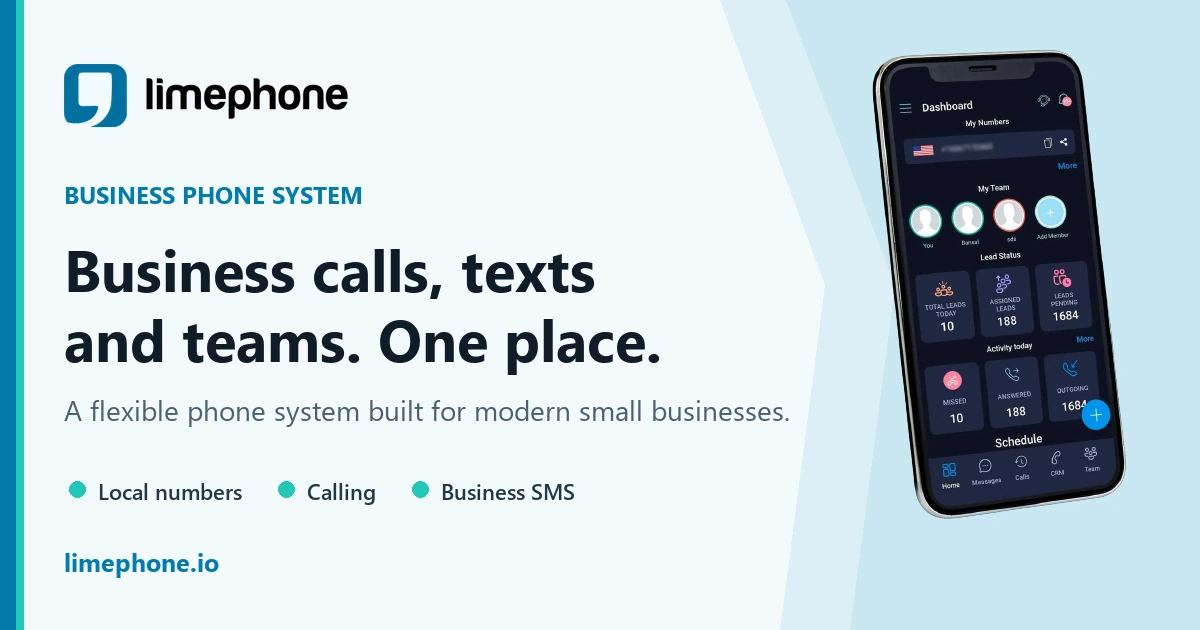
LimePhone is built around this simpler, team-friendly model: business numbers without extra devices, shared communication without chaos, and enough structure to keep customer conversations moving.
The bottom line
The biggest business phone trend in 2026 is not any single AI feature. It is the move from personal, scattered communication to owned, shared, measurable business communication. Teams that make that shift can respond faster, protect employee privacy, keep customer history, and scale without buying more devices than they need.
If your team is still using personal numbers for customer calls and texts, start with the basics: create dedicated work phone numbers, centralize communication, and make follow-up visible.