

Updated November 2026
The best landline replacement for most UK households is the free digital voice service from their broadband provider, such as BT Digital Voice. Small businesses usually do better with VoIP: LimePhone costs £7 a month (Lite) or £15 a month (Starter), while Vonage starts at £10 and RingCentral at £12.99 per user. Telecare users should check with their alarm provider first.
This guide compares the realistic ways to replace a UK landline, with prices taken from each provider's own UK site as of November 2026. It covers who each option suits, what it costs, and where it falls short.
Why do I need a landline replacement at all?
Openreach is closing the old copper telephone network (the PSTN), and BT has set 31 January 2027 as the date analogue calls end. After that, every home and business phone line has to run over an internet connection. Ofcom says that if your provider contacts you about the change, you should respond, and that you will usually need to plug your phone into your broadband router. For the full timeline and what breaks, read our UK landline switch off 2027 guide.
The good news is that you have choices. You can let your current provider move you to its digital service, move your number to a VoIP provider, or drop the landline and use a mobile. Which is best depends on whether the line is for a household or a business, and on what else is plugged into it.
How do the main UK landline replacements compare?
Prices below are from each provider's UK pricing page in November 2026. Business VoIP prices exclude VAT. Check the provider's site before you buy, because prices change.
| Option | Typical cost (as of November 2026) | Needs broadband? | Keep your number? | Best for |
|---|---|---|---|---|
| BT Digital Voice | No extra charge to switch; your existing home phone plan applies | Yes, BT broadband | Yes | BT households who want things to carry on as before |
| Other broadband digital voice (Sky, Virgin Media and others) | Check your provider | Yes | Usually | Households already with that broadband provider |
| LimePhone | Lite £7/month (1 user); Starter £15/month (3 users) | Any internet or mobile data | You can request a port | Sole traders and small teams who want a UK number on their phone and laptop |
| Vonage Business Communications | Express £10, Core £15, Max £25 per user per month, ex VAT | Any internet | Yes, via porting | Small businesses that want desk phones and a familiar brand |
| sipgate | business S £12.95, L £17.95, XL £22.95 per user per month, ex VAT (minimum 2 users) | Any internet | Yes, via porting | Teams that want IVR and call queues with UK call packages |
| RingCentral RingEX | From £12.99 per user per month billed annually (£17.99 monthly), ex VAT | Any internet | Yes, via porting | Growing companies that want video, messaging and phones in one tool |
| Mobile only | Your mobile contract | No | Not as a landline number, unless you move it first | People who rarely use the home phone |
| Cordless (DECT) phone on a digital line | The cost of a compatible handset or adapter | Yes | Depends on the service behind it | Anyone who wants to keep using a home handset |
Is BT Digital Voice the best option for households?
For most BT customers, yes. BT says switching to Digital Voice won't cost you anything, and that you won't pay more than your current home phone plan unless you upgrade when you recontract. Calls run over your BT broadband, and Call Protect and voicemail are included as standard.
Setup is simple. On switch-over day you unplug your phone from the wall socket and plug it into your BT Smart Hub 2. If the hub is in a different room, or you want to keep an older phone, BT offers a free adaptor. Our BT Digital Voice explainer walks through the steps.
The main drawback is resilience. BT states that in a power cut or broadband outage you will not be able to make calls on Digital Voice, including 999 calls. It recommends keeping a charged mobile as a backup. Ofcom requires providers to offer a free battery back-up unit, lasting at least one hour, to customers who rely on their landline and have no working mobile signal.
Suits: BT broadband households, especially people who make few calls and want no changes. Less good for: anyone without BT broadband, or a business that wants calls on several devices.
What about Sky, Virgin Media and other broadband providers?
Other broadband providers are moving their customers to digital home phone services that work in a similar way, with the phone connected to the router instead of the wall socket. Ofcom notes that Virgin Media O2 plans to retire its own older landline network but has not set switchover dates. Pricing and setup vary by provider, so ask yours directly what it will charge, whether it supplies an adaptor and what back-up it offers.
Suits: households happy with their current broadband who just want the phone to keep working.
Which business VoIP services are worth a look?
If the landline is a business number, a VoIP service usually gives you more for the money than a home phone plan. Calls ring on apps, laptops and desk phones, and you can route them to different people. We cover this in more depth in VoIP for UK small business. Here are four options.
LimePhone
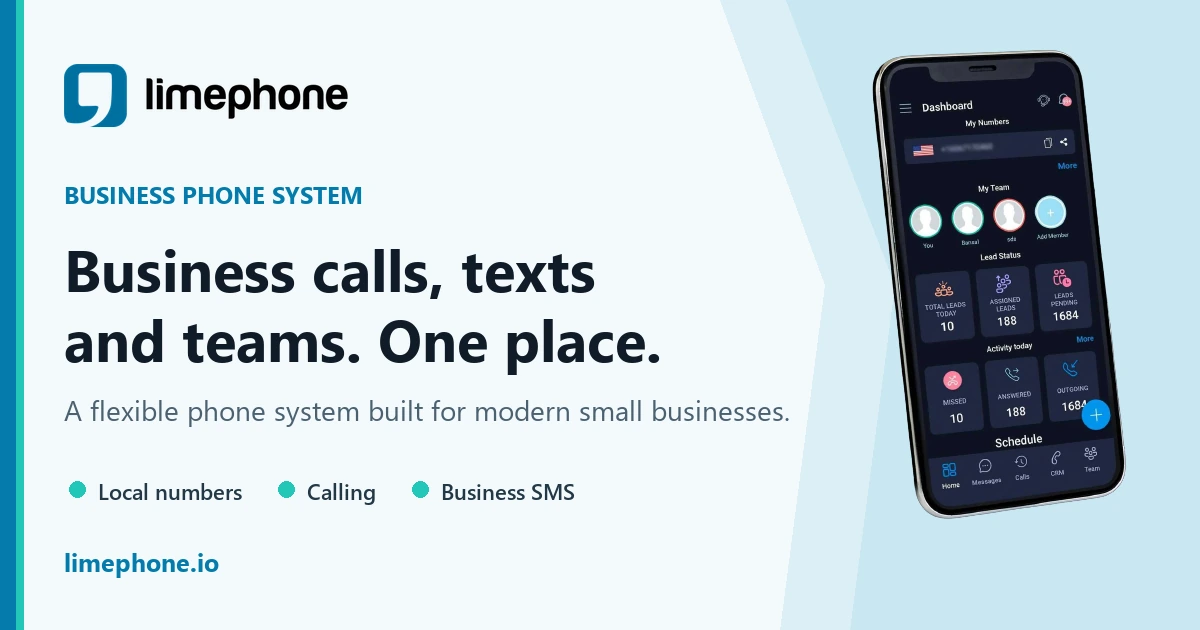
LimePhone gives you a UK business number that works in a web browser and an Android app. The Lite plan is £7 a month (or £70 a year) for one user and includes a UK number. Starter is £15 a month (or £145 a year) and covers three users, adding a shared call and SMS inbox for the team, AI call summaries, an auto attendant (IVR) and bulk SMS. Calls and texts to UK, US and Canadian numbers are unlimited, subject to fair usage.
You can request a port of your existing UK number on any plan. Eligibility is checked by your current provider, so a port is not guaranteed. Calls can also be forwarded to any mobile or SIP device, which helps if you want to keep a desk phone. An optional AI receptionist add-on, priced in US dollars at $10 a month including 100 minutes, can answer calls when you are busy.
Be aware of the limits. There is no iPhone app at the moment, so iPhone users would rely on the web app or call forwarding. There is no free trial. It is built for sole traders and small teams, not large call centres.
Suits: freelancers, tradespeople and small offices who want a virtual UK landline on a budget.
Vonage Business Communications
Vonage's UK site lists three plans: Express at £10, Core at £15 and Max at £25 per user per month, excluding VAT. Calls beyond your plan's allowance are charged per minute. Vonage is a long-established name and supports desk phones as well as apps.
Suits: small businesses that want a recognised provider and desk handsets. Per-user pricing adds up quickly for larger teams.
sipgate
sipgate's UK price list shows business S at £12.95, business L at £17.95 and business XL at £22.95 per user per month, excluding VAT, with a minimum of two users. Call queues, IVR and a UK call package start on the L plan, and XL adds an EU call package. Extra devices are £4.95 each.
Suits: teams of two or more who want visual call routing and a UK call bundle. The two-user minimum makes it a poor fit for a single person.
RingCentral RingEX
RingCentral's UK pricing page lists four RingEX plans: Essentials at £12.99, Standard at £19.99, Premium at £24.99 and Ultimate at £29.99 per user per month on annual billing, or £17.99 to £33.99 on monthly billing. It bundles phone, messaging and video meetings.
Suits: growing businesses that want one platform for calls and meetings. It is more than most households or sole traders need.
Can I just use my mobile instead of a landline?
Many people can. If you rarely use the home phone, giving it up and relying on your mobile is the cheapest option, and Ofcom points out that a mobile is a practical back-up in a power cut. The catch is the number. If friends, family or customers know your landline number, it will stop working when you cancel the line unless you move it somewhere first.
You do not have to keep a landline to keep the number. A VoIP service can hold the number and ring your mobile. Our guide to keeping your landline number without a landline explains how, and call forwarding covers the setup.
Suits: people with good mobile signal at home who make few landline calls. Less good for: anyone with a telecare alarm, or a business that relies on a published landline number.
Can I keep using a cordless DECT phone?
Usually, yes. Most digital home phone services let you plug a standard cordless phone base into the router or into an adaptor, so the handsets around the house keep working. BT, for example, offers a free adaptor if your phone cannot reach the hub.
For VoIP services, you can use an IP DECT base station or an analogue telephone adapter that connects to your router and registers with the VoIP provider. Check that your provider supports the device before you buy it. Ofcom also advises checking with your supplier before buying any new device that uses your phone line. Remember that a cordless base needs mains power, so it will not work in a power cut either.
Suits: older relatives who are used to a home handset, and small shops or offices that want a phone on the counter.
What should elderly and telecare users check?
If someone in the home has a personal alarm, pendant or other telecare device, do not switch without speaking to the alarm provider first. Ofcom says these devices may not work on a digital line, and that you should tell both your landline provider and your device supplier before the change. Providers can pause the move until a safe solution is in place.
There is also a power issue. Battery back-up rules cover emergency calls, and the government's Telecare National Action Plan sets out how telecare users should be protected during the switchover. Our guide to Digital Voice, alarms and telecare covers what to ask. In short, a VoIP app such as LimePhone is not a replacement for a telecare line.
Which landline replacement should I choose?
- A BT household with simple needs: accept BT Digital Voice and keep a charged mobile.
- A household on Sky, Virgin Media or another provider: ask your provider about its digital home phone service.
- A household that hardly uses the landline: go mobile only, and move the number first if people still call it.
- A sole trader or small team: a low-cost VoIP number such as LimePhone Lite or Starter.
- A business that needs desk phones and call queues for several staff: compare Vonage, sipgate and RingCentral on per-user cost.
- Anyone with a telecare alarm: talk to the alarm provider before changing anything.
If a business UK number on your phone and laptop sounds right, see LimePhone pricing, or start with Lite at £7 a month or Starter at £15 a month. Our UK landline replacement hub has more guides. Sources: BT Digital Voice and Ofcom's landline guidance.
Frequently asked questions
What is the best landline replacement in the UK?
For most households it is the free digital voice service from their broadband provider, such as BT Digital Voice. For small businesses, a VoIP service is usually better value. LimePhone starts at £7 a month, and Vonage, sipgate and RingCentral start between £10 and £12.99 per user ex VAT.
Do I have to pay to switch to a digital landline?
BT says switching to Digital Voice won't cost you anything and you won't pay more than your current home phone plan unless you upgrade when recontracting. Other providers set their own terms, so check with yours.
Will my landline phone work after the switch off?
Most standard phones keep working once they are plugged into the router or an adaptor. Some older equipment, alarms and card machines may not. Check with the supplier of any device that uses the phone line.
Can I keep my landline number if I cancel my landline?
Often, yes, if you move the number to a VoIP provider before you cancel. With LimePhone you can request a port of your existing UK number, and your current provider checks whether it is eligible. Cancelling first can mean losing the number.
Does a digital landline work in a power cut?
No, not without a battery back-up. Ofcom requires providers to offer a free back-up lasting at least one hour to people who rely on their landline and have no working mobile signal. Keeping a charged mobile is the simplest back-up.
Is VoIP safe for telecare alarms?
Do not assume it is. Speak to your telecare provider before switching, because some alarms do not work on digital lines. An app-based business phone service is not designed to carry a telecare alarm.


