Yes—you can use two phone numbers on one phone. The best method depends on what you need: Dual SIM is useful when you want two carrier lines, a virtual phone number is usually simpler for a separate business identity, and call forwarding works when you only need incoming calls redirected.
This guide explains each option, the setup trade-offs, and how to avoid mixing customer conversations with personal calls.
Three ways to have two phone numbers on one phone
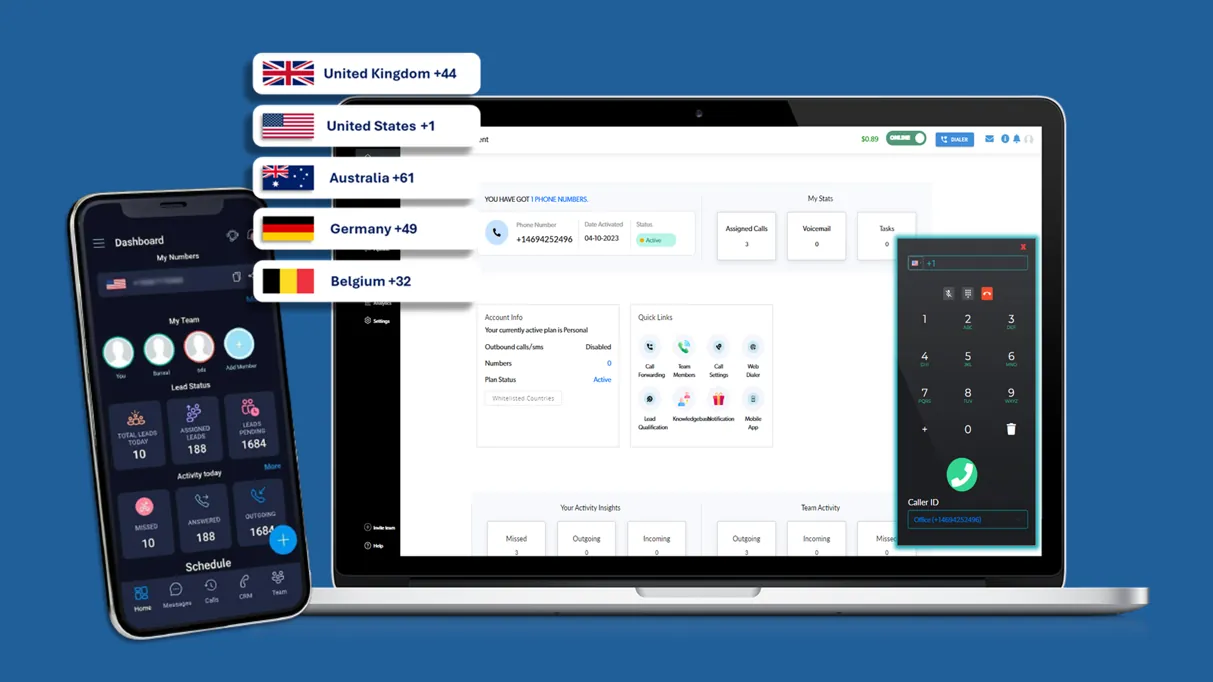
- Virtual business number: Best for calls, business texting, voicemail, routing, and team access in one app. Check country availability, SMS support, number porting, and call rates.
- Dual SIM or eSIM: Best for two carrier plans on one compatible handset. Check device compatibility, carrier support, lock status, and roaming.
- Call forwarding: Best for receiving calls from an existing number on your current phone. Check forwarding charges and whether texting or outbound caller ID is needed.
Option 1: Add a virtual business phone number
A virtual phone number works through an internet-based phone service rather than a second physical SIM. Calls and messages appear in a business app while your personal number stays in your phone's normal dialler.
This is often the cleanest option for freelancers, local businesses, and small teams because it can provide more than a second line: business hours, voicemail, call routing, shared conversations, and separate caller ID can all travel with the number.
How to set it up
- Choose a provider that supports the country and number type you need.
- Check whether calling, SMS, porting, and team access are supported for that number.
- Select a new number or start a port request for an eligible existing number.
- Install the mobile app and sign in.
- Set business hours, voicemail, notifications, and routing before publishing the number.
- Place a test inbound call, make an outbound call, and test SMS if messaging is enabled.
You can check number availability before choosing a plan. Availability and regulatory requirements vary by country and number type.
Option 2: Use Dual SIM or eSIM
Many recent phones can keep two cellular plans active through two physical SIMs, a physical SIM plus an eSIM, or two eSIMs. On compatible iPhones, Apple lets you label the lines and choose defaults for voice and cellular data. Apple also notes that using two different carriers requires an unlocked iPhone, and only one cellular data network is used at a time.
Android setup varies by manufacturer and carrier, but the basic process is similar: add or activate the second SIM, label each line, and choose defaults for calls, messages, and mobile data.
When Dual SIM is the better fit
- You need two separate carrier plans.
- You regularly travel and want a local or data eSIM.
- You need carrier-level service even when a business calling app is unavailable.
Dual SIM separates lines, but it does not automatically add business workflows such as shared inboxes, call menus, business hours, or team routing. It can also mean managing two carrier bills.
Option 3: Forward a second number to your phone
Call forwarding sends incoming calls from one number to another. It is useful for a legacy line or a simple overflow setup, but it may not preserve a complete separation between personal and business communication.
Before relying on forwarding, confirm whether you can identify which number was called, return calls using the correct caller ID, receive texts, and access voicemail in the right place. Also check forwarding charges. If you need a fuller workflow, business call forwarding within a virtual phone system may be more suitable.
Which option should you choose?
Choose a virtual number when the goal is a professional business line with separate conversations and call-handling tools. Choose Dual SIM when the goal is two independent mobile carrier plans. Choose forwarding when you already own a second number and only need its inbound calls to ring your current phone.
What to check before adding a second number
- Number ownership: Can you port the number later if you change providers?
- Messaging: SMS and MMS availability can vary by country, number type, and registration status.
- Caller ID: Make sure outbound calls display the business number, not your personal number.
- Business hours: Decide what happens after hours—voicemail, forwarding, or an AI receptionist.
- Team access: If several people answer, use roles and a shared conversation history rather than sharing passwords.
- Emergency calling: Understand the provider's emergency-calling limitations and keep your registered address current where required.
How to keep personal and business calls separate
Give customers only the business number, use a distinct ringtone, write a business-specific voicemail greeting, and silence work notifications outside your published hours. Save customer contacts in the business system when possible, and review permissions before adding team members.
If you already advertise a business number, check whether it can be ported instead of replacing it. Porting keeps the number customers recognise, although eligibility and timing depend on the losing and gaining carriers.
Frequently asked questions
Can I have two phone numbers without two phones?
Yes. Use a virtual number, a compatible Dual SIM/eSIM phone, or forwarding from another number.
Can both numbers ring the same phone?
Yes. A Dual SIM phone can receive calls to either active line, and a virtual number can ring through its app or configured forwarding rules. Behaviour may vary when one line is already in use.
Can I use WhatsApp or other apps with a second number?
Possibly, but each app has its own verification and number-eligibility rules. Confirm that the number can receive the required verification message or call before relying on it.
Does a second number protect my personal number?
It reduces the need to publish your personal number, but privacy still depends on account security, app permissions, and how you share contact information.
Can a team answer the same second number?
Yes, if the business phone provider supports shared numbers, permissions, and routing. A carrier SIM by itself is normally tied to one device or plan.
Reviewed July 2026. Device and carrier capabilities change; verify current compatibility before purchase. Device guidance is based on Apple's official Dual SIM documentation.
Start with a separate business number