The best Google Voice alternative depends on whether you need a simple second line, a shared business phone, an all-in-one communications suite, or programmable voice. For small businesses that need international numbers, shared calling, texting, or call routing, Google Voice's availability and feature model can be restrictive.
We compared seven current alternatives using official product and pricing information, with emphasis on business calling—not affiliate payouts. LimePhone is our product, so we identify it clearly and encourage you to verify every provider against your own workflow.
Best Google Voice alternatives at a glance
- LimePhone: Best for small businesses needing international virtual numbers and flexible call handling. Check country-specific number and SMS availability.
- Quo: Best for North American teams wanting a polished shared inbox. International requirements may need another fit.
- RingCentral: Best for larger organisations wanting a broad communications suite. It involves more administration than a basic second line.
- Zoom Phone: Best for teams standardised on Zoom Workplace. Model packaging and add-ons carefully.
- Dialpad: Best for teams prioritising AI-assisted calls and transcripts. Advanced capabilities can depend on plan.
- Grasshopper: Best for solo businesses wanting simple forwarding and extensions. It is less suited to sophisticated shared workflows.
- Nextiva: Best for businesses consolidating phone and customer communication tools. It may be broader than a very small team needs.
Why businesses look beyond Google Voice
Google Voice is a sensible choice for users who want close integration with Google Workspace. However, Google states that the no-cost consumer service is US-only. Its paid business editions have country, account, and feature differences; Google also documents SMS availability as US-only for Voice for Google Workspace.
That makes an alternative worth considering when you need international local numbers, richer routing, a shared team inbox, country-specific messaging, dedicated onboarding, or a phone system that is not coupled to Google Workspace.
How we evaluated providers
We reviewed official product, help-centre, security, and pricing pages in July 2026. We assessed number availability, porting, mobile and desktop apps, call routing, business SMS, team collaboration, integrations, AI capabilities, support, security information, and pricing transparency. Features and prices change, so use this guide to create a shortlist and confirm the current terms directly.
1. LimePhone: best for flexible international business numbers
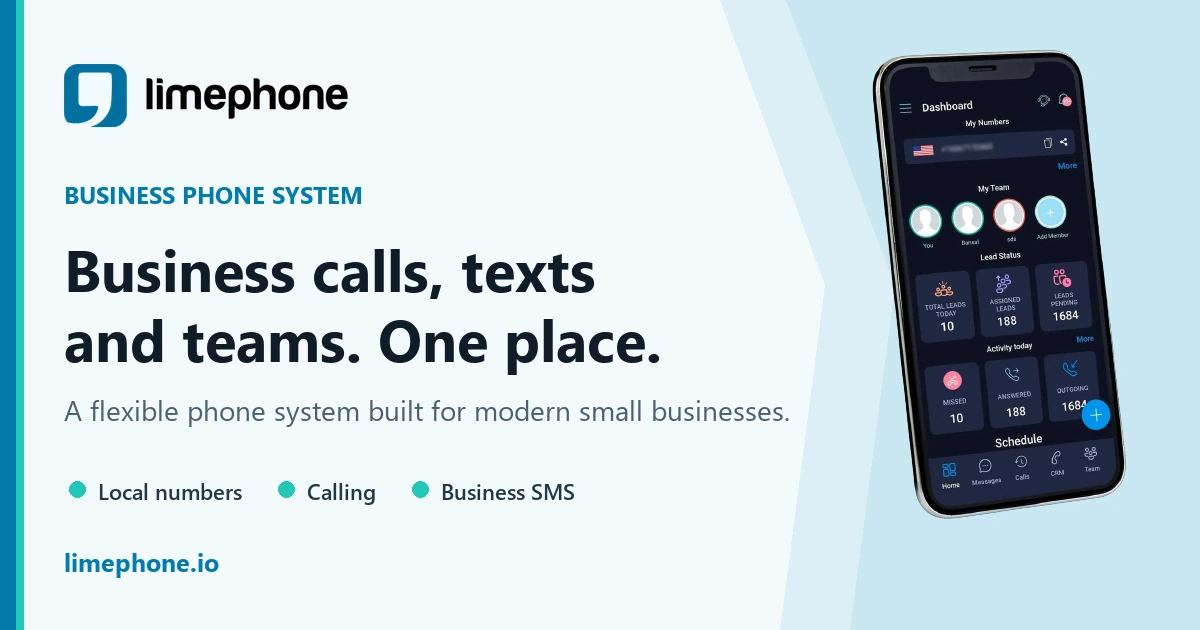
LimePhone is designed for businesses that want a professional number for calls, supported SMS, voicemail, routing, and team conversations across web and mobile. It is a strong shortlist option when you need to evaluate local or international number inventory rather than limiting the search to the US.
Best for: small businesses, service companies, remote teams, and founders who need flexible number coverage.
Check before buying: number inventory, required documents, SMS capability, and call rates are specific to the country and number type. Use the number checker and rates page.
2. Quo: best for shared conversations in the US and Canada
Quo, formerly OpenPhone, focuses on an approachable business phone experience with shared numbers, calling, messaging, contact context, and workflow integrations. Its current plans also present AI and call-handling features for growing teams.
Best for: North American teams that prioritise collaborative customer conversations.
Trade-off: confirm international number availability, usage rules, and carrier registration needs for your markets.
3. RingCentral: best for enterprise communications breadth
RingCentral combines cloud telephony with meetings, messaging, integrations, administration, and contact-centre options. It can fit organisations that need central governance across many users and locations.
Best for: established organisations with IT ownership and broad communications requirements.
Trade-off: purchasing, configuration, and plan comparison can be more involved than a lightweight phone service.
4. Zoom Phone: best for Zoom-centred organisations
Zoom Phone extends the Zoom platform with calling, voicemail, recording, routing, integrations, and mobile and desktop access. Zoom publishes metered and unlimited plan options, with availability depending on market.
Best for: teams that already administer Zoom Workplace and want phone in the same ecosystem.
Trade-off: compare base licensing, calling plans, numbers, and add-ons together.
5. Dialpad: best for AI-assisted calling
Dialpad puts AI transcription, summaries, coaching, and communications workflows at the centre of its platform. It is worth testing when conversation intelligence matters as much as basic telephony.
Best for: sales and support teams seeking AI-assisted call workflows.
Trade-off: verify which AI, integration, and support capabilities belong to each plan.
6. Grasshopper: best for straightforward forwarding
Grasshopper is aimed at entrepreneurs and small businesses that want a business number, extensions, greetings, and calls delivered to existing phones.
Best for: a solo operator who wants a simple professional front door.
Trade-off: teams needing deep shared history, analytics, or complex routing may outgrow it.
7. Nextiva: best for consolidating customer communications
Nextiva offers business voice alongside broader customer communication and experience products. It can suit companies that want to reduce the number of separate communications tools.
Best for: growing companies looking beyond standalone calling.
Trade-off: confirm the exact bundle; a broad platform can exceed the needs of a simple second-line buyer.
How to choose
- List the countries and number types required now and in the next year.
- Estimate users, numbers, inbound minutes, outbound minutes, and messages.
- Map the real call flow, including after-hours and missed calls.
- Verify number porting and ownership terms.
- Test voice quality, caller ID, notifications, and mobile behaviour.
- Compare the total monthly and one-time cost, including taxes and registration.
Frequently asked questions
Is Google Voice free for business?
Google offers a no-cost consumer service in the US, but organisations typically use a paid Google Voice business edition. Google publishes current editions, availability, and prices in its official help centre.
What is the best alternative for international numbers?
Choose based on the exact countries and number types you need. LimePhone is one option to evaluate, but inventory and regulatory requirements vary.
Can I keep my Google Voice number?
Eligible numbers may be portable. Check Google's unlocking or port-out steps and the gaining provider's eligibility process before cancelling anything.
What should a small business prioritise?
Reliable calling, number ownership, clear pricing, business hours, voicemail, routing, mobile usability, support, and the messaging capabilities your customers actually use.
Reviewed July 2026. Google Voice facts were checked against Google's official account and pricing documentation. Provider features and prices change.
Try LimePhone for your business number